
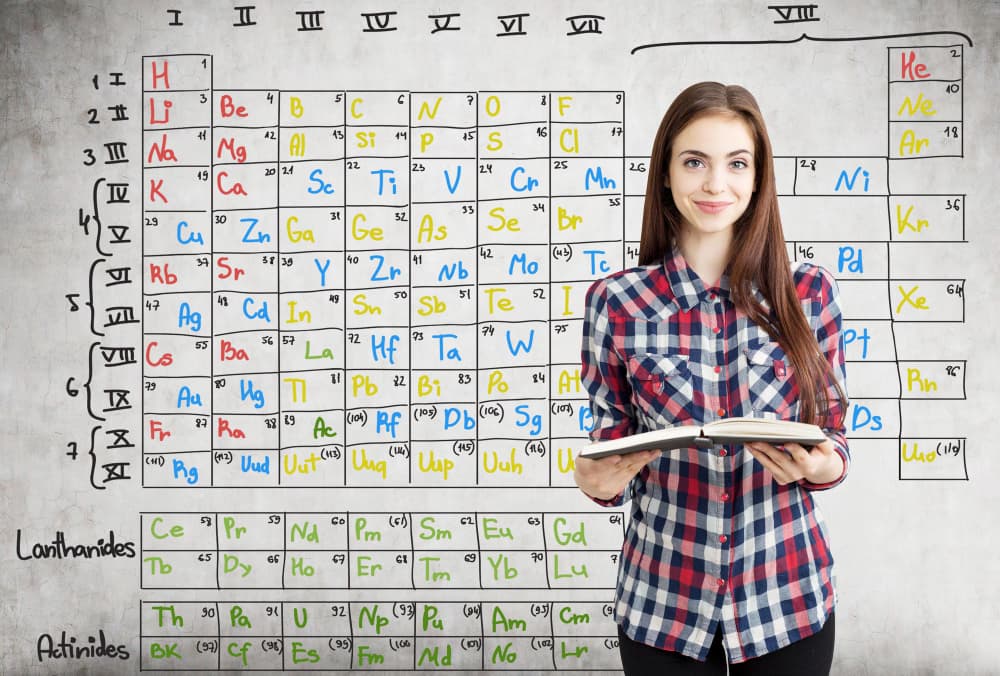
10 Creative Tricks to Learn the Periodic Table Faster for Exams
10 Creative Tricks to Learn the Periodic Table Faster for Exams
Written by Vnaya
If asked which part of chemistry is particularly stressful to a student, chances are, the first thing that will come to mind is the periodic table. With 118 elements, unusual symbols, and a square that looks like a crossword puzzle, it’s almost impossible to find the logic behind the table. And most of the time, students do just that: try to memorize everything during the last night before an exam, and fail.
However, the periodic table turns out to be much more consistent than many would believe at first glance. It only needs to be treated not as a random row but as a map of elements. The tips listed below are used by tutors in practice: easy, a bit funny, and efficient. No matter if a student studies alone or via online learning, periodic table understanding requires much repetition rather than some particular talent.
10 Creative Tricks That Actually Work
1. Learn Blocks, Not Elements
Don’t learn from element 1 to element 118; instead, get the shape of the table into your brain – the s-block, the p-block, the d-block, the f-block. Get the location of the metals on the periodic table, of the non-metals, and of the metalloids that make up that famous “staircase.”
2. Create Ridiculous Mnemonic Sentences
Your mind loves strange things. That’s how it works.
Group 1: Here Little Naughty Kids Rob Cs Fruit
Group 17: Funny Clowns Bring Ice At Ts
Period 2: Little Bears Bring Cold Nuts On Friday Nights
Create your own. Your mnemonics created by yourself will be remembered much longer than those found in some book because of the act of creation, which is already revision.
3. Color-Code Everything
Print out an empty chart and color code it yourself:
Alkali metals – red
Halogens – green
Noble gases – blue
Transition metals – yellow
Color gives you a visual cue. In an exam, students have told me they see the color before they know the name. And that’s because you’ve got a secondary method for memorizing that information.
4. Make Elements People
Assign characteristics to elements. Sodium is the crazy one who will explode when he comes into contact with water. Helium is the silent one who won’t react with anyone. Gold is the fancy one who never corrodes. Nonsense stories make emotional associations, and emotional associations stick.
5. Sing It!
That's because song lyrics stick with you from way back when. Recite the first 20 elements to your favorite tune or a pre-existing periodic table song. Your memory requires chunking, which rhythm does all on its own.
6. Flashcard Study with Spaced Repetition
Create flashcards using the element symbol on the front side and the name, atomic number, and group number on the back side. Then study according to the following schedule:
Day 1 - Day 2 - Day 4 - Day 7 - Day 15
Spaced repetition will crush rote memorization any day of the week. Twenty minutes each day for a week will defeat studying for four hours straight the night before, no exceptions.
7. Sketch the Blank Table Grid from Memory
This is by far the most useful technique of all of those mentioned. Each day, draw a blank 18-column table and fill it up with whatever you can remember. Check yourself. Make corrections using another color pen. Repeat the next day.
In two weeks' time, most students will be able to sketch out at least a good portion of the table from memory. And that single habit is the difference between knowing the table and being able to recognize it.
8. Relate the Elements to Life Applications
People remember facts which mean something to them:
Neon = shop signs
Tungsten = light bulb filaments
Silicon = phone chips
Calcium = bones/milk
Iodine = antiseptic/iodized salt
Life applications will be extremely helpful in application-based questions which trip up most students.
9. Create a Memory Palace
Take a virtual walk around your house and allocate a set to each room. Kitchen for alkali metals, bathroom for halogens, balcony for noble gases. And then populate these rooms with your elements. It may sound crazy, but spatial memory is one of the most powerful memory tools we have.
10. Teach it to Another Person
Tell the periodic table to your brother, to your friend, or even to an imaginary person in a chair. Teaching forces you to structure your information and instantly reveals what you did not know.
Related blog: Tricks to Remember the First 30 Elements in Periodic Table
FAQ's
1. How long does it take to learn the periodic table?
Within 20-30 minutes of dedicated learning each day, one can easily complete the first 30 elements within a week and a full working knowledge of the periodic table in four to six weeks.
2. Is it important for me to learn all the elements in the periodic table?
No. In general, the first 30 or 40 elements are those which are taught in most educational institutions.
3. Is it safe to use mnemonics during the examination?
Yes, but only when practised under the time constraint. The mnemonics that you learn for the first time won't come back to your memory during the exam.
4. What do you need to choose between understanding and memorization?
Both memorization and understanding of the trends, but in that order because after having memorized the layout of the periodic table, the trends would become much easier to understand.
Conclusion
The periodic table is not something you have to memorize. It’s a pattern, and patterns can be understood by any person who is ready to learn through practice every day. You’ll be surprised by how much you will learn.
Are you looking for a way to learn how to study better? If so, Vnaya matches you with experienced chemistry tutors who give you individual attention in accordance with your syllabus and your pace of learning. Try a complimentary demo lesson from Vnaya now and feel the difference.